It is not often you come across dance music with a conceptual framework as dense as Polar Inertia. Over the course of fifteen years, they developed a five-album project spanning multiple disciplines: design, photography, writing, and music. With noisy imagery and haunting poems about the so-called Polar Children, their world has remained elusive to this day. As Polar Inertia’s story comes to a close, we spoke with one of the members.
The final Polar Inertia release π on the label Mama Told Ya concludes the arc of the Polar Children, who find their solace in a white world of snow and tumult. They appear to reach a final destination, though its nature remains unclear. The story is carried by a protagonist who narrates on one track of each of the five releases, guiding the listener through a sci-fi-like trajectory. The conceptual layering of the "techno band” is rooted in art school, where every decision is driven by meaning. The project’s narrative remains dense and layered, while the structure of its creative team has stayed deliberately opaque even fifteen years on. Exactly how it was intended. In conversation with one of its members, we trace some of the layers behind the project, though many remain unresolved for both the listener and the group themselves.
The depth throughout the Polar Inertia project is noteworthy. Since the first release in 2010 it stood out within the vast realm of techno. How did the project come to life?
I come from a conceptual arts background, and so do some other members of the Polar Inertia team. Four of us met through ENSAPC in Cergy, France, which is very much oriented toward conceptual art and new media. After being there for many years, it becomes kind of hard to create anything without wanting to add some layers of meaning. When we make a record, it's not just about creating nice music. Music is the medium through which we communicate emotions and deeper, intellectual meaning. At the same time, we embrace the mystery and not be too literal.
Dancefloor-oriented music is often released without lyrics. Sometimes the visual or tangible aspect as an artwork is stripped back to mere functionality. The only way to capture it is through hearing. How does a conceptual framework within electronic music work? Would you say it’s more difficult?
Our projects are often driven by writing. We have a bunch of poets and writers who help us create a certain aesthetic and narrative that exists between fiction and philosophy. Working with creative input from other types of arts helps us create something unique.
But as you said, in music, lyrics aren't always there. So the first place where you add some meaning, even though there are no lyrics, is the titles. For us, this is really important and one of the things I learned in school; sometimes titles do about 90% of the job. You can make a track, but once you name it something stupid, you devalue your work completely. But if you have a nice track that is a bit emotional and you name it Hell Frozen Over, like one of our tracks, you can create a projection of an idea that ends up being perceived differently than intented.
Another important thing for us, is the aesthetics of the graphics; the artworks, as well as the different ways we communicate visually through our channels. The way you present yourself to the world can be seen as an extra layer of creativity, making your art more profound.
With this approach, you no longer make music because you like music, but you see it as a whole, trying to construct a universe that is interesting and rich, hiding many different meanings, signs, and symbols. At this point you’re no longer just a music producer, but something else.
Interesting. Like an architect or conductor orchestrating a team around a project. What other creatives do you work with?
We work with writers, poets, video artists, photographers, graphic designers and, of course, sound designers.
That’s a big team.
Yes, but it's a team of friends that are sometimes in, sometimes out. It's completely informal. These people join us in developing our vision by adding their own techniques or creative processes. In the end, they all become important elements of this group that makes us very... I don't know, a bit particular or strange.
.webp)


'Nothing is real'
The Polar Children narrative in Indirect Light follows children chasing a dream state in a lab, culminating in the line: ‘We will bring about ultimate obscurity. We will present this indirect light.’ Did this story emerge from the music itself, or was it already in place as a conceptual framework before composition began?
The project is based on a book by Paul Virilio with the same title: L’inertie polaire which felt evocative to me. I wanted to create something around the vibe of the book, not necessarily the text itself. So I asked a friend who writes science fiction to write a five-chapter story based on the book's five chapters: Indirect Light, The Last Vehicle, Kinematic Optics, Environment Control, and Polar Inertia. He came back with the beginning of a story about two children who were born on opposite sides of the planet on the same day, at the same hour. The story we tell is completely different from the book, but I think it functions as an aesthetic reference. We started building music around the story, along with artworks and videos. I think it's fair to say that the starting point was more on the writing side, even though the intention was primarily to make an electronic music band.
In Kinematic Optics, released in 2015, there's a phrase that says ‘Machines will fail us’.
I'm not sure whether this exact sentence is from the book or from one of the writers of this chapter. Even for myself it’s getting really confusing to track down who did what. There are different writers who wrote different parts. I like the concept of blurring the lines so you can’t understand who is who and who is doing what.
It does seem to be a reference to the book from 1999, which reflects on the effects of new technologies. Weirdly enough, it seems to mirror the times we find ourselves in, with wrought-up algorithms, AI, and addictive screens.
That's the beauty of it. I think he wrote that 13 years ago. We are very science-fiction-inspired, but the way the world is developing today is kind of disturbingly melting into fiction. Nothing is real.

Your website mentions that the story of Polar Inertia invites the audience to reflect on the modern world and humanity's place in the grand natural history.
I don't know how much the writers were influenced by the book. I told them not to read it, haha, but maybe the one who wrote this did.
Paul Virilio is a philosopher who is fascinated by the acceleration of the world, technologies and disaster. For this project, I wanted to create a different scenario. We came up with this chaotic world, some sort of world war setting. Here, we added a symbolic duality between these two mysterious children, who are looking for a certain kind of state called Polar Inertia, but it’s unclear exactly what that is. It seems to be a solution to all the mess that is going on in the world, but the what, where and when remains unclear.
It’s interesting to notice how you aimed for a conceptual framework but left a vast free space for personal interpretation by every creative involved. You are not very strict about the construction or implementation of the concept, it seems.
Exactly. That's the beauty of being a large group where individuals are open to expressing themselves based on a general aesthetic. No one is controlling anyone in their own creativity. I do try to brief everyone involved, but in general, they know what we do and each just tries to elevate the whole concept in the same direction, but opening it to another layer of understanding.
Your website mentions that the story of Polar Inertia invites the audience to reflect on the modern world and humanity's place in the grand natural history.
I don't know how much the writers were influenced by the book. I told them not to read it, haha, but maybe the one who wrote this did.
Paul Virilio is a philosopher who is fascinated by the acceleration of the world, technologies and disaster. For this project, I wanted to create a different scenario. We came up with this chaotic world, some sort of world war setting. Here, we added a symbolic duality between these two mysterious children, who are looking for a certain kind of state called Polar Inertia, but it’s unclear exactly what that is. It seems to be a solution to all the mess that is going on in the world, but the what, where and when remains unclear.
It’s interesting to notice how you aimed for a conceptual framework but left a vast free space for personal interpretation by every creative involved. You are not very strict about the construction or implementation of the concept, it seems.
Exactly. That's the beauty of being a large group where individuals are open to expressing themselves based on a general aesthetic. No one is controlling anyone in their own creativity. I do try to brief everyone involved, but in general, they know what we do and each just tries to elevate the whole concept in the same direction, but opening it to another layer of understanding.
You usually play live sets with two people, right?
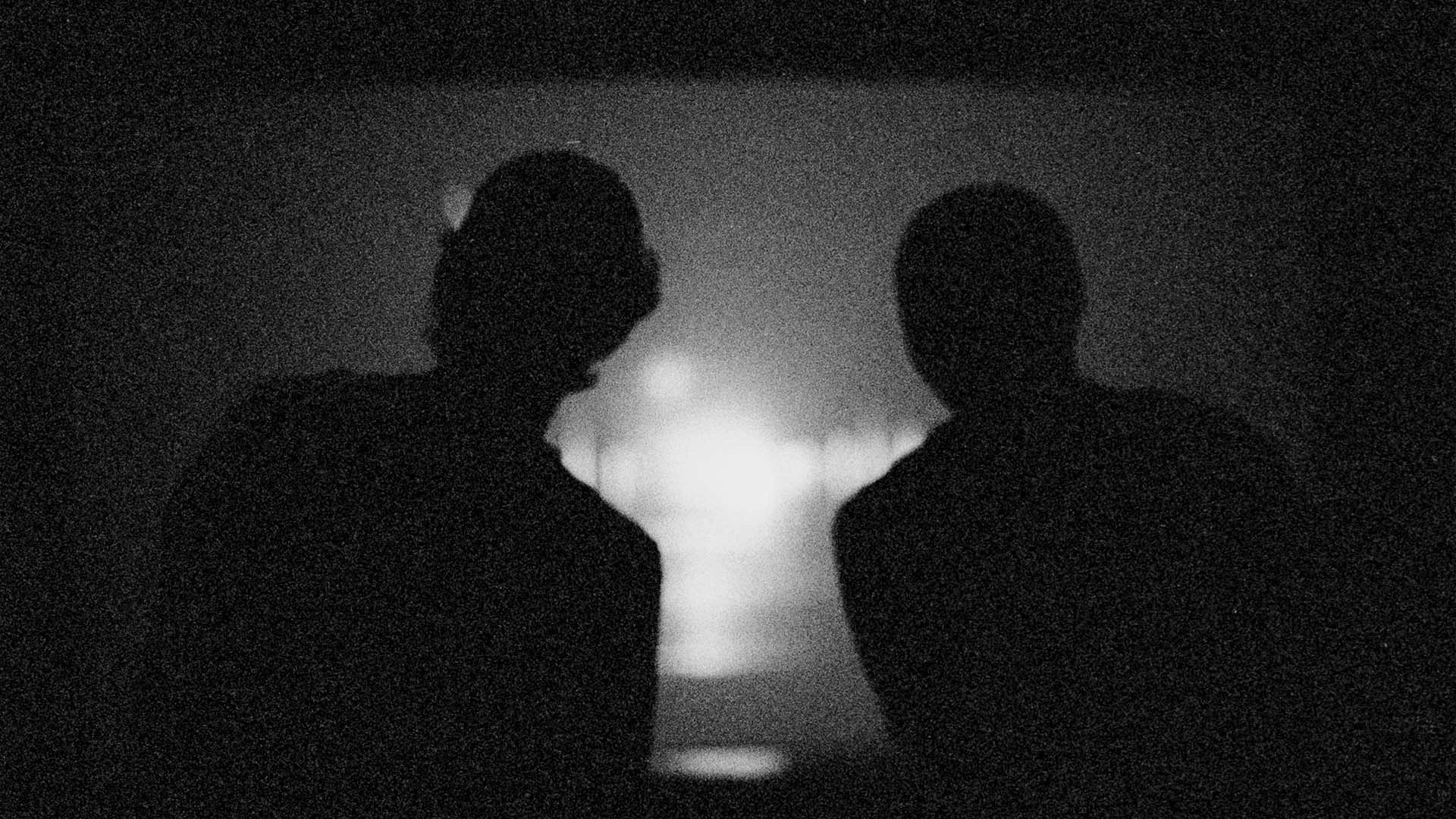
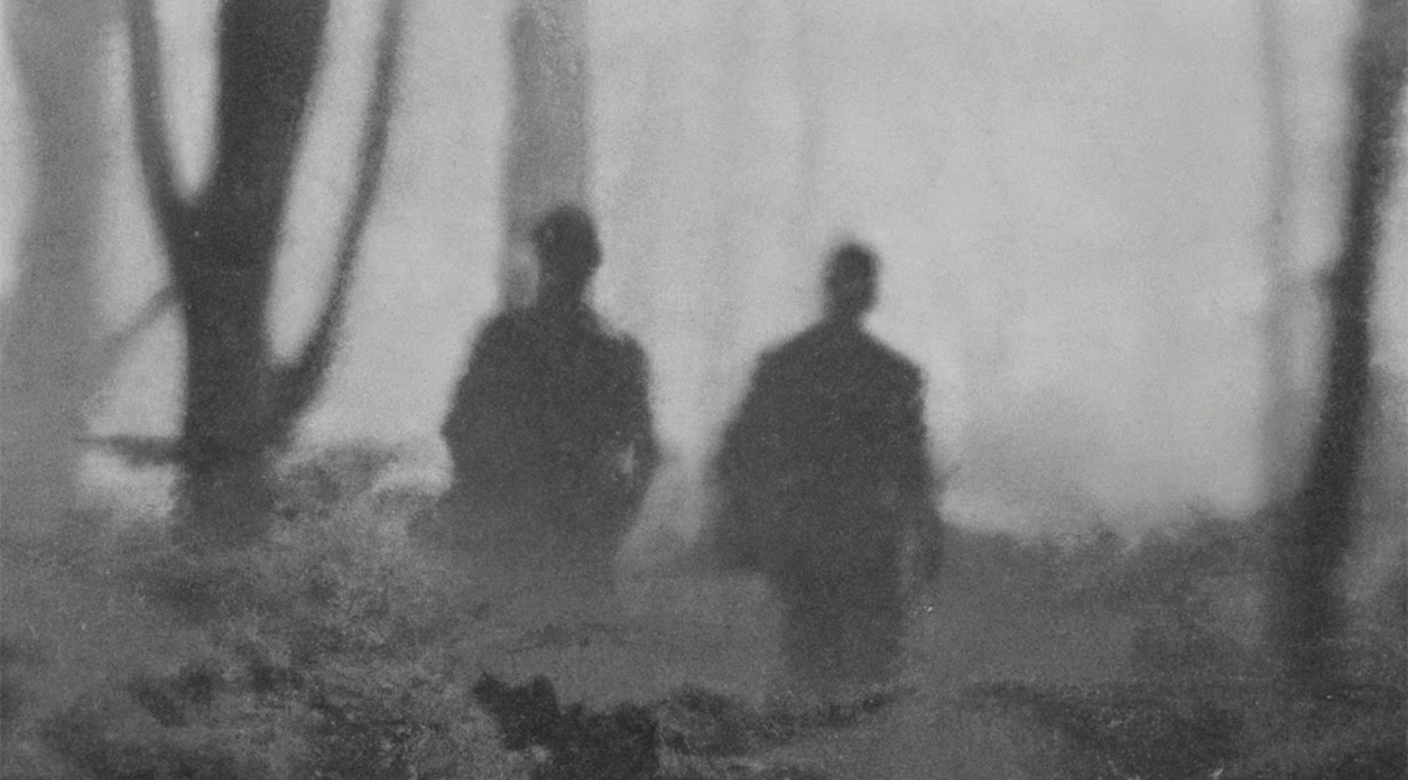
We started as a duo on stage but our main sound designer suddenly had to stop touring, after that, there was a phase when I was on my own but I didn't want to embody the whole group, so we expanded the live set again to two people. It also strengthens this idea of symbolic duality and the image of two silhouettes lost in the mist.
During Pe:rsona festival in 2024, you invited someone from your wider circle, a photographer and scientist with barely any musical background. The set was amazing. Why did you feel like this could work?
I was interested in his photography at first. He's a master of blurriness. He got the aesthetic right, even though he doesn't have a musical background. I knew he didn't have much skill, but sometimes this can work within your favour in a live setup. I gave him a noise drone machine to experiment with, which I used whenever I wanted, and it turned out to be pretty interesting. Today, I still consider him a part of the group, even though he's more on the photography and graphic side of things. That matters to me as much as the music for this project. I consider all the people involved on any level as important as the music itself.
.webp)


'It's about mystery, but it's mainly about density'
I wanted to highlight another phrase: 'A field of thought where identity dissolves into perception'. The Polar Children narrative carries a strong sense of intentional opacity, where it is often unclear who is doing what within the project. Was this ambiguity something you set out to create from the beginning?
I think we always wanted to be blurry and vaporous. That's why our communication is never really straightforward and always made through some kind of poetic diversion. I think I like the unobvious sides of things. It makes things more subtle and delicate.
It also seems to leave room for interpretation.
Yeah, if you want to take it as a techno band, then it's already good as it is. But the ones that are really interested can dig into the little details and clues we leave around. It forces you to make an effort to learn the details.
It's about mystery, but it's mainly about density. Even in the music, you can tell there are so many layers and the larger it gets – the fog thickening – the more you search for answers. I like not being clear all the time. Like a deep unclarity of things.

.webp)
.webp)
In the end, the Polar Inertia project spanned fifteen years. How did it stay relevant to you?
I always had other music projects that I was happy to develop on the side. However, I think especially around COVID times, and when the world started to turn a bit darker, Polar Inertia made more sense. That’s when I would put more energy into it. Nowadays, it feels more relevant than ever.
With the state of the world?
Yeah. It’s a mess.
True, the final Polar Inertia release completely makes sense now. It feels like we’re increasingly confronted with the idea that reality itself might be unstable — that systems and narratives we once took for granted start to dissolve or contradict themselves. Everything feels strangely deconstructed.
Yes, however, I always kind of fought against the idea of Polar Inertia being a dark project. For me, it has a lot of deep, beautiful emotions. I would put it more on the bright spectrum, even though that might feel weird. When you get lost in a very bright, foggy, snowy world, where the only thing you can see is white, you get more or less the same feeling as when you are in a dark room. Polar inertia is the same saturation of light. It gives you the same feeling of getting lost in a very bright and white environment that hurts your senses a little bit.
The world is dark, but Polar Inertia is a way to balance it into the intense, extreme opposites, which can also be as disturbing as the darkness itself is.
Is the project now fully finished? Or is there a new beginning?
It is the last chapter, but another chapter could always emerge. Another book potentially.
Who knows. Reality isn’t fixed.
.webp)
.webp)
The project concludes with the final Polar Inertia album ‘π’, marking the closing of a fifteen-year trajectory that continues to resist fixed interpretation. The live chapter will also unfold at Minimal Collective x FIBER Festival 2026 on May 30th at TILLATEC Amsterdam, where the project returns to a physical space in its final year. Join the event here.